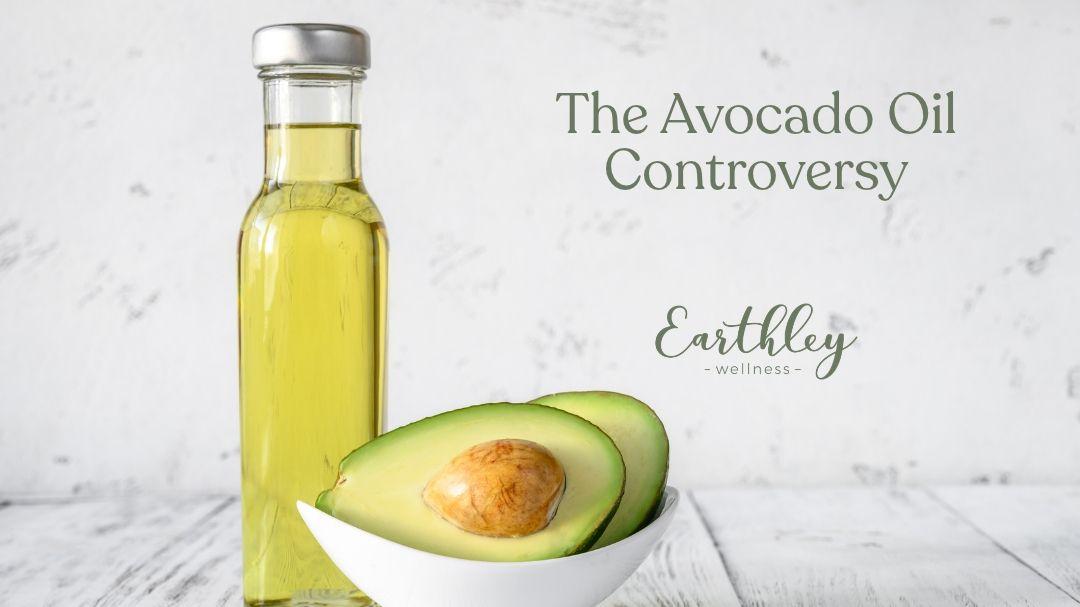
Well Well Wellness: The Avocado Oil Controversy
Is your avocado oil really avocado oil? A 2026 UC Davis study raised serious questions about the purity of avocado oil used in popular foods like chips, mayonnaise, and salad dressings. Explore what researchers discovered, how brands are responding, and what families can do to make more informed choices without stretching their grocery budgets.
Well Well Wellness
The Avocado Oil Controversy: The Study That Found the Lies Behind the Labels
We know we’re not alone here in the grocery aisle with this $30 jar of mayonnaise in our hands, trying to make the impossible choice between our families’ health and our budget.
If you’ve ever made sacrifices just to afford feeding your family the “healthier” option, than you know the feeling when you find out that the products you spent your hard-earned money on have been hiding cheap filler ingredients.
That’s why this 2026 UC Davis study finding 89% of tested avocado-oil labeled foods contain cheaper oils has a lot of people feeling disgruntled.
In This Article, We’ll Talk About:
- What UC Davis Avocado Oil Studies found in 2026, and before that in 2023 and 2020.
- The legal repercussions of the 2026 study and avocado oil company responses.
- The regulations that make olive oil a more trustworthy choice and how policy makers can follow suit with avocado oil.
- What we can do as consumers to put our money where our trust is.
The 2026 Avocado Oil Study
UC Davis researchers tested the chemical composition of 54 avocado oil-labeled products for purity and published a report in July 2026 with these findings:
- 26 of 28 chip products failed: 93%
- 10 of 14 mayonnaise products failed: 71%
- All 12 salad dressings failed: 100%
- Only 6 of the 54 avocado-oil products passed
The researchers allowed a 10% margin of deviation to account for avocado variety, geographic origin, processing, and other natural differences. Even with that allowance, 89% failed.
For comparison, researchers tested 20 similar foods labeled as using olive oil, and 19 of 20 passed.
This Was Not the First Warning: The History of Avocado Oil Testing
The 2020 Bottled Oil Study
In 2020, UC Davis researchers tested 22 store-bought brands of avocado oil against their own 100% pure lab-made sample. At least 82% turned out to be stale, mislabeled, or mixed with other oils.
They found:
- 15 of the samples were oxidized before the expiration date—meaning exposure to light, heat, or air has caused them to lose their flavor and health benefits.
- 6 samples were mixed with large amounts of other oils, including sunflower, safflower, and soybean oil
- 3 products labeled “pure” or “extra virgin” were nearly 100% soybean oil.
- Only 2 brands were pure and nonoxidized: Chosen Foods and Marianne’s.
The 2023 Private Label Study
Then, in 2023, researchers tested 36 different olive oil brands from manufacturers that make products sold as store or retailer brands in the United States and Canada.
They found:
- Only 31% were pure
- Only 36% were of the quality claimed
- Very inexpensive products were more likely to be adulterated
- A high price still did not guarantee purity
The study also emphasized that “rancid” and “adulterated” are different problems. An oil can be genuine avocado oil but oxidized from age, heat, light, or poor storage. Alternatively, it can be fresh but mixed with another oil.
Why are Avocado Oil Test Results So Much Worse Than Olive Oil?
Avocado oil is relatively new on the market, so its authenticity hasn’t been tracked well yet. Olive oil, on the other hand, has been tested and studied for decades, and has had strict standards and regulations applied to it.
The recent avocado oil study was led by Selina Wang, UC Davis Food Science and Technology professor and chemist, who was part of the team that tested “extra virgin” olive oil brands in 2010.
When 69% of tested olive oils failed the purity test, Selina and her team collaborated with government agencies on years of additional testing, industry pushback, consumer lawsuits, closer inspection, and stronger standards. Eventually, the state of California and the USDA both adopted strict quality standards.
And here’s the good news: The testing, standards, and scrutiny have apparently paid off. In the new 2026 comparison, 19 of 20 olive-oil-labeled foods passed.
And if it worked with olive oil, maybe avocado is the next oil to enter a phase of improvement.
The Legal Repercussions of the Recent Avocado Oil Study
Since the avocado oil results were published, multiple food manufacturers that sell products labeled “made with avocado oil” have been under civil investigation by Texas Attorney General Ken Paxton.
As of September 14, 2026, the companies under scrutiny for mislabeling their products are:
- Primal Kitchen, owned by Kraft Heinz
- Siete Foods, owned by PepsiCo
- Chosen Foods
Other companies may receive the same demands.
This means that they are being asked to present documents, records, testimony, or other information. It is not a verdict, criminal charge, or proof of fraud.
Separately, a proposed class-action lawsuit has been reportedly filed against Utz Brands over Boulder Canyon avocado oil chips.
It is important to note: Companies may not knowingly be using adulterated oils. It is possible that the suppliers themselves are adding other oils to products they are selling as pure avocado oil.
What the Named Brands Say
Chosen Foods says the study’s claims are “simply not true”: their avocado oil is pure, no seed oils are ever added, and it is tested internally by outside labs. They say the UC Davis tests did not account for the chemical changes that occur when avocado oil is processed into mayonnaise and dressings. UC Davis counters that these changes have been accounted for in the study.
It’s worth noting that Chosen Foods is one of the two brands whose bottled oil passed both quality and purity testing in UC Davis’s 2020 study.
Primal Kitchen says it takes the findings seriously but doesn’t believe the methods of testing the oils are reliable. They argue that authentic oil can test differently depending on avocado variety, growing conditions, fruit ripeness, and other natural variations. Remember though--the test did leave a 10% margin of deviation for these factors.
They say their suppliers confirm oil integrity through independent lab testing and Primal Foods remains confident in their product ingredients. As of yet, they are not releasing their third-party testing records.
Siete Foods has not yet made a public statement that we are able to find.
What We Can Do as Consumers
The truth is that unless we choose to live in a bubble, we can’t ensure that every single thing we eat is pure. And stressing over every ingredient is not going to make us healthier - it might even do the opposite.
But we do deserve honesty from the companies that profit from our hard-earned money.
That’s why at Earthley, transparency is a core value. We are a family-owned company you can trust to tell you the truth and not to sell out to a faceless mega food corporation.
We will never add synthetic or hidden ingredients in anything we make. We’re genuinely in this to help make your family’s life easier and healthier.
These are some practical ways we can feel better about where we’re putting our dollars and what we’re putting in our families’ bodies:
- Avoid ultra-processed foods as much as possible.
- Make your own when you can. Our Wholesome Real Food Favorites Cookbook has some simple, kid-tested recipes.
- Do your research. Studies like the UC Davis ones are making more food quality information publicly available.
- Support local, small-batch food producers when you can.
- Certified Organic regulations make it very hard for companies to sneak in any secret ingredients.
- Choose oils and fats that have stricter standards: olive oil, butter, tallow, and ghee.
- Check out some of the recent research on seed oils. Studies are showing that some of the fear around them has been influencer hype and some of them can actually be part of a healthy diet - when they’re organic, expeller-pressed, and from a trustworthy source. (6) (7)
- When possible, don’t give your money to companies who don’t offer sourcing and labeling transparency.
The Bottom Line
It’s a shame we have to work so hard just to get the truth, but it’s the reality. Hopefully, with more studies, more regulations, and higher standards, we’ll eventually be able to believe what we read on a label and rest a little easier.
And in the meantime--do what you can, when you can. Hydration, exercise, sleeping well, stressing less, and enjoying your life are just as important as (if not more than) scrutinizing every ingredient.
Key Takeaways
- It’s clear from the UC Davis tests that lack of transparency in avocado oil labeling is a problem.
- Success with stricter standards for olive oil can be an example for how to move forward with avocado oil.
- We as consumers deserve honesty from companies that profit from us and there are some practical ways we can support those who share our values.
Disclaimer - This blog post is provided for educational and informational purposes only and does not constitute providing medical advice or professional services and its statements have not been evaluated by the FDA. The information provided should not be used for diagnosing or treating a health problem or disease. Always seek the advice of a qualified health care provider regarding a specific medical condition.
Sources:
1. Authenticity of avocado and olive oils used as ingredients in commercially processed foods - ScienceDirect
https://www.sciencedirect.com/science/article/pii/S2772502226007274
2. (PDF) First report on quality and purity evaluations of avocado oil sold in the US
https://www.researchgate.net/publication/341116002_First_report_on_quality_and_purity_evaluations_of_avocado_oil_sold_in_the_US
3. Most Avocado Oil Chips and Dressings Are Adulterated, Study Finds | UC Davis
https://www.ucdavis.edu/food/news/avocado-oil-chip-youre-eating-may-not-be-made-pure-avocado-oil?utm_source=chatgpt.com
4. Study Finds 82 Percent of Avocado Oil Rancid or Mixed With Other Oils | UC Davis
https://www.ucdavis.edu/food/news/study-finds-82-percent-avocado-oil-rancid-or-mixed-other-oils?utm_source=chatgpt.com
5. Purity and quality of private labelled avocado oil - ScienceDirect
https://www.sciencedirect.com/science/article/pii/S0956713523002372
6. Concerns about the health effects of industrially produced seed oils are without scientific foundation: a scoping narrative review of the clinical and observational evidence - PubMed
https://pubmed.ncbi.nlm.nih.gov/42047660/
7. Evaluating the effects of seed oils on lipid profile, inflammatory and oxidative markers, and glycemic control of diabetic and dyslipidemic patients: a systematic review of clinical studies - PMC
https://pmc.ncbi.nlm.nih.gov/articles/PMC11849496/#s5
8. Effects of Saturated Fat, Polyunsaturated Fat, Monounsaturated Fat, and Carbohydrate on Glucose-Insulin Homeostasis: A Systematic Review and Meta-analysis of Randomised Controlled Feeding Trials - PMC
9. The Truth About the Avocado Oil Scandal: A Sourcing Nightmare
https://www.youtube.com/watch?v=r4NOZJnoZBI
10. olive oil final 071410
https://olivecenter.ucdavis.edu/sites/g/files/dgvnsk14776/files/media/documents/report2010finalthree.pdf?utm_source=chatgpt.com
11. Microsoft Word - US grades for olive oil Eff. 10-25-10.doc
https://www.ams.usda.gov/sites/default/files/media/Olive_Oil_and_Olive-Pomace_Oil_Standard%5B1%5D.pdf
Stay Connected
Get updates and exclusive offers straight to your inbox.